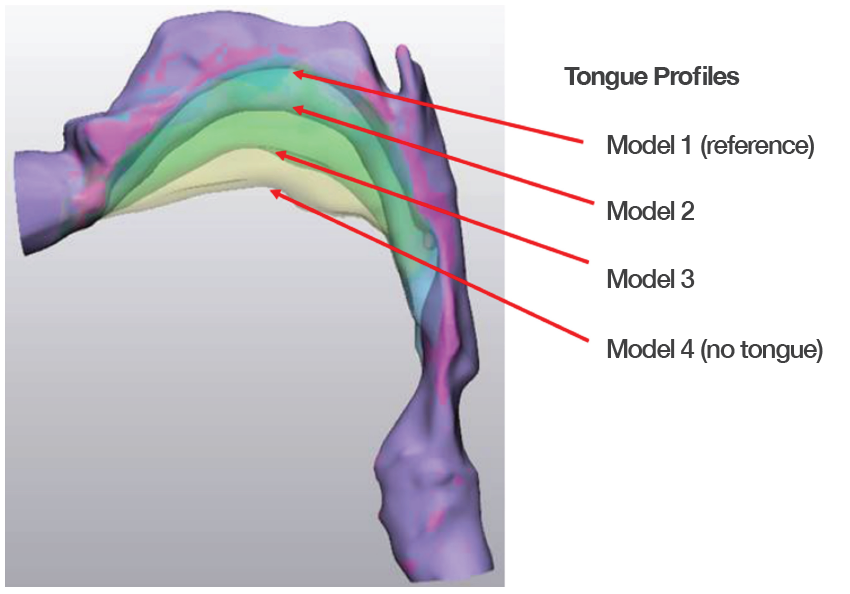
TONGUE VOLUMES IN THE MODELS
- Model 1: volume of tongue not reduced (reference)
- Model 2: tongue volume 60% of reference
- Model 3: tongue volume 30% of reference
- Model 4: tongue volume 0% of reference
Figure 1: Combined Sagittal View Superimposing the Four Model Adult OCs Having Tongue Volumes of 100% (Model 1), 60% (Model 2), 30% (Model 3), and 0% (Model 4)
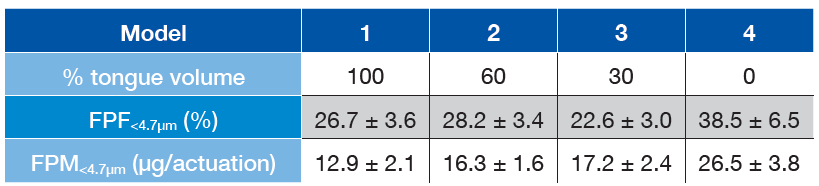
Table 1: pMDI-Delivered Salbutamol without VHC (mean ± S.D.) to Four Adult OCs with Differing Tongue Volumes
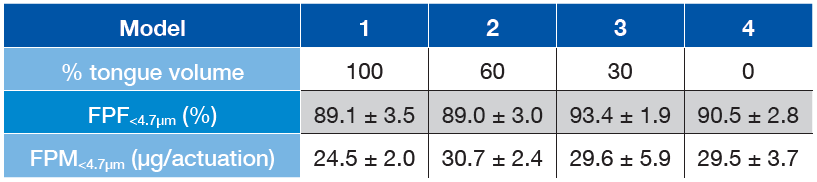
Table 2: pMDI- Delivered Salbutamol with VHC to Four Adult OCs with Differing Tongue Volumes
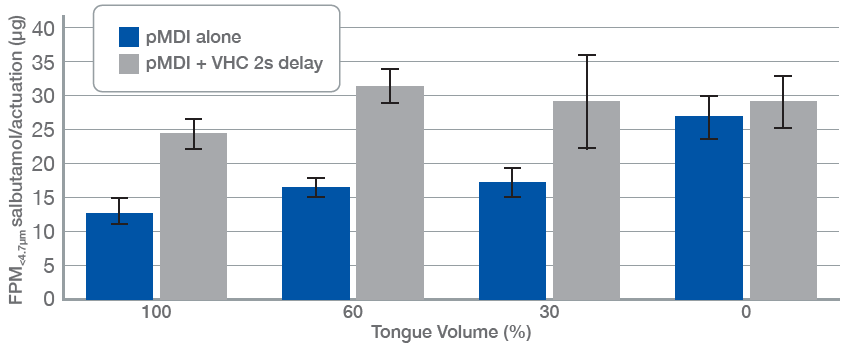
pMDI Alone and pMDI +VHC with a 2 s Delay Following Actuation
CONCLUSION
This study confirms the importance of the tongue in controlling the amount of medication as fine particles capable of reaching the airways of the lungs.
If a VHC is absent, it confirmed that fine particle mass will be reduced compared with the case when a VHC is interposed between inhaler and the mouth of the patient.
If a VHC is present, it showed consistent fine particle delivery, independent of tongue position, without the need to coordinate actuation with inhalation.
When assessing inhaler technique a VHC should be recommended, and if not, tongue position should be discussed with the patient.
Download the Poster
Importance of the Tongue as an Impactor for Orally Inhaled Aerosols from a Pressurized Metered Dose inhaler (pMDI) With and Without a Valved Holding Chamber (VHC)
Download Poster