Living with COPD

Chronic Obstructive Pulmonary Disease (COPD) affects around 251 million people globally.1 It is a term that covers two types of chronic (long-term) diseases where the airways in the lungs become “obstructed” or partly blocked.

More About COPD

COPD is a progressive disease, meaning it typically worsens over time. It cannot be cured, but it can be treated and managed so people with COPD can breathe better and live fuller lives.

What is COPD?

COPD consists of two types of breathing diseases (some people with COPD have both of these diseases):

  • Chronic bronchitis which makes the airways inflamed, red and swollen. Airways cannot clear the mucus and the glands in the airways make extra mucus (phlegm), resulting in full or part blockage of some of the airways. This leads to shortness of breath, cough, and coughing up mucus
  • Emphysema is when the alveoli (air sacs) in the lungs are damaged. When your alveoli are damaged or destroyed, it becomes difficult for the lungs to exchange oxygen and carbon dioxide and less oxygen gets into your body. Your lungs do not fully empty and air is trapped.
lung icon, living with COPD

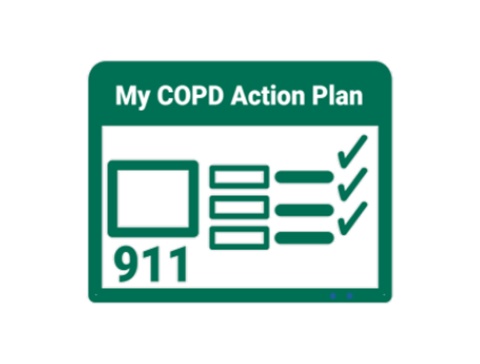
COPD Action Plan

A COPD action plan is a written agreement between you and your doctor that spells out how to handle your symptoms as your condition changes. It should be tailored for you by a healthcare professional. Your action plan covers a full range of events, from when you feel good to if you need emergency medical care.

To better manage your COPD, develop a personalized COPD Action Plan with your healthcare team. You can bring this printable to your next healthcare appointment. 

Causes

The main cause of COPD is smoking

Other causes include:

  • Second-hand smoke
  • Air pollution (dust or chemicals)
  • Repeated lung infections during childhood
  • Severe asthma
  • Asthma combined with smoking
  • A rare genetic disorder called Alpha-1 antitrypsin deficiency
lady with cane

Signs & Symptoms

COPD patients usually have one or more of these symptoms:

  • a cough that lasts a long time (3+ months)
  • a cough with mucus
  • feeling short of breath while doing daily activities, such as climbing the stairs or carrying groceries, jogging, etc.
  • lung infections (colds and the flu) that may last longer than usual
  • wheezing (a whistling sound when you breathe)
  • feeling tired
  • losing weight (without trying to)

Please note that feeling short of breath is not a normal sign of aging. Talk to your healthcare provider if you are short of breath when doing everyday activities like walking up the stairs.

Further Reading

If you have any questions or concerns about how to best manage your COPD, check out the links below or talk to your doctor or pharmacist.
The Lung Association

Living Well with COPD

Global Initiative for COPD

Diagnosis & Testing

Diagnosis

To test for COPD, your healthcare provider will ask you some of the following questions:

  1. Do you currently smoke or have you smoked in the past 
  2. How often are you short of breath? 
  3. What makes your shortness of breath worse?  
  4. Do you cough? How long have you been coughing? 
  5. Do you cough up sputum (phlegm, mucus)? 
  6. Do you or does anyone in your family have a lung disease? 
  7. Did you have a lot of lung infections when you were younger? 

Testing for COPD 

  • Spirometry: This is the most reliable test to diagnose COPD. It is a simple breathing test that measures how much air a person can inhale and exhale and how quickly they can exhale. 
  • Chest X-ray: This test helps the doctor assess if there is any lung damage and it can help show emphysema. It is often recommended to be used with spirometry.  
  • Oximetry: This measures the levels of oxygen in your blood by clipping a “probe” to your finger and can be used with other tests to diagnose COPD.  
  • Your doctor may order other tests such as lung function tests, CT scans, or a blood test. 

Treatment

COPD can't be cured, but it can be treated so you can live a fulfilling and satisfactory life.

Proper COPD treatment and management includes:

  • Build Your COPD Team: Create a strong COPD team for yourself that includes your doctor, respiratory therapist, respiratory educator, pharmacist, and/or family or friends. This team will provide comprehensive care, support, and guidance.
  • Quit Smoking: If you smoke, quitting is crucial to slow down the progression of COPD. Your healthcare provider can assist you in creating a cessation plan.
  • Medications: Follow your healthcare provider's guidance regarding COPD medications. These medications can help prevent and alleviate symptoms, making daily life more comfortable.
  • Lifestyle Adjustments: Make necessary changes to your lifestyle to promote overall health. A balanced diet, staying hydrated, and getting adequate rest are all essential.
  • Physical Activity: Engage in regular physical activity and exercise, as your health allows. Joining a pulmonary rehabilitation program can provide additional support and guidance.
  • Symptom Control: Learn how to prevent and manage COPD flare-ups or symptom exacerbations. Recognize your triggers and create a plan with your healthcare provider to address them.
  • Oxygen Therapy: Some individuals with severe COPD may require oxygen therapy. If your doctor recommends it, follow their advice on its use.
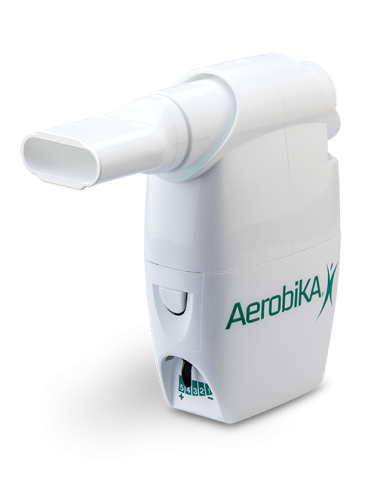
  • Airway Clearance Therapy: Often times, drug-free options like airway clearance therapy using devices such as the Aerobika* can be effective. Discuss this with your healthcare provider to determine if it's suitable for your specific needs.

Always consult your healthcare provider to tailor your COPD treatment plan to your unique condition and needs. They can provide the most appropriate guidance and recommendations for you.

Prescription Medication 

There are many types of medications and treatments available to make your life with COPD easier.

These include both inhaled and oral (taken by mouth) medications:

  • Bronchodilators: These medications help alleviate shortness of breath by opening up your airways, making it easier to breathe.
  • Combination Bronchodilators and Anti-inflammatories: Some medications combine bronchodilators with anti-inflammatories to both relieve shortness of breath and reduce the risk of COPD flare-ups.
  • Antibiotics: Antibiotics are prescribed to combat infections in the respiratory system, which can exacerbate COPD symptoms.
  • Supplemental Oxygen: Oxygen therapy, often provided through oxygen tanks, can help improve low oxygen levels and boost your energy, making it easier to perform daily activities.
  • Vaccines: Flu and pneumonia vaccines are recommended to help prevent respiratory infections, as individuals with COPD are more susceptible to these illnesses.

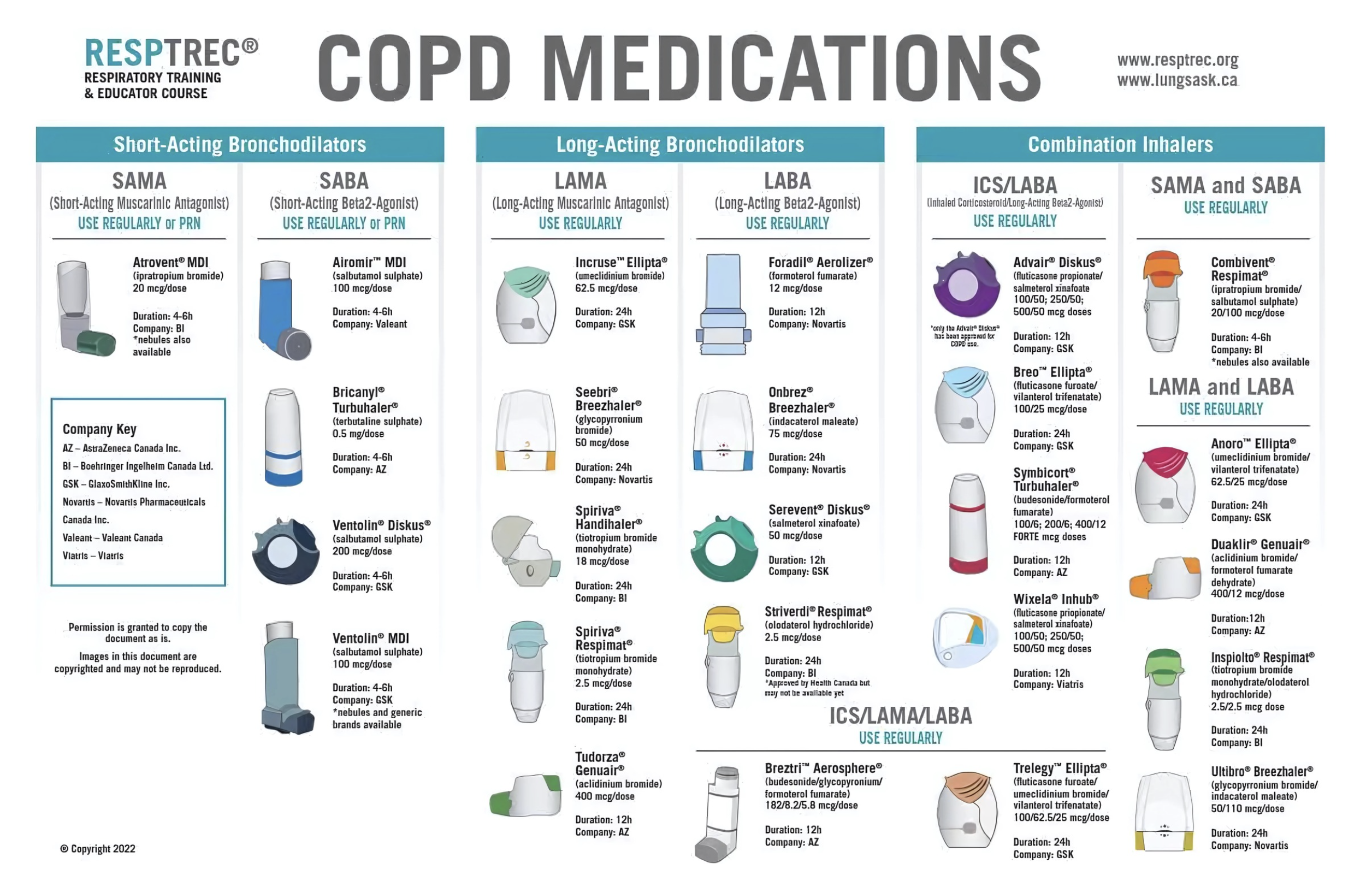
The primary form of medication for COPD management is through inhalers, also known as puffers. These inhalers come in various types and devices, tailored to suit specific needs and preferences. To explore a list of the most common inhalers available in Canada, you can download the chart.

Airway Clearance Therapy

Excess of Mucus in Airways7

With COPD, the airways become swollen and obstructed, this has an impact on mucus production and clearance which has severe consequences. Excess mucus can prevent proper airflow and reduce lung function and health. This creates an environment for bacterial growth and airways infection in addition to ongoing symptoms. It becomes more difficult to clear excess mucus, which leads to increased coughing, airway inflammation and damage. This leads to an increased risk of respiratory infections, poor quality of life, increased flareups and hospitalizations.

To help loosen and clear this excess mucus from the airways, an effective and drug-free solution may be airway clearance therapy. 

Clearing the Airways using Airway Clearance Therapy7 

Airway clearance therapy is a drug-free disease management option to clear excess mucus in the airways and improve breathing. Handheld devices such as positive expiratory pressure (PEP) devices like the Aerobika* device. These devices provide resistance when you breathe out and help the cilia move the mucus.  

The Aerobika* device works by creating pulses of pressure in the lungs when breathing into the device. These pulses of pressure can help open weak airways and produce vibrations that thin and loosen mucus. This naturally helps mucus be cleared from airways and improves breathing.  

Learn Techniques to clear Mucus/Sputum

If you are producing excess mucus, different techniques like deep breathing & Huff cough may help you clear the excess mucus.

Devices like the AEROBIKA* OPEP device are simple hand-held drug free devices, which could help to clear the mucus/sputum.4

Exacerbations (Flare-ups)

A COPD flare-up or lung attack happens when usual COPD symptoms get worse over a short period of time (a few hours to 48 hours), or when new symptoms develop.

Flare-ups are also called exacerbations.

77% of COPD patients have experienced exacerbations leading to an increased risk of hospitalization and disease progression2. According to Canadian data, 1 in 5 patients hospitalized for a COPD exacerbation require re-hospitalization within 30 days3.

A flare-up can be caused by a lung infection, such as a cold or the flu, smoking and exposure to air pollution, including second hand smoke. If you have COPD, it is important to prevent flare-ups and understand the signs and symptoms of flare-ups. A COPD flare-up may cause further damage to your lungs.

To manage your COPD, you need to know:

  • how to prevent flare-ups
  • warning signs and symptoms of a flare-up
  • what to do if you have a flare-up, including when to get emergency help

Managing Exacerbations

If you have COPD you need to be aware of changes in your symptoms, and be prepared to manage them.

For instance, would you know what to do in certain situations and who to call to get help? This is the time to take what you have learned and apply it to your own life, on a day-to-day basis.

In order to be ready, your doctor and healthcare team need to develop an Action Plan with you. This will be your decision-making tool. Here are ways your Action plan will help you:

  • Identify your resources
  • Identify your usual symptoms
  • Identify your regular treatment & what to do when you feel well
  • Learn to recognize & manage an aggravation of your symptoms

COPD Action Plan

A COPD action plan is a written agreement between you and your doctor that spells out how to handle your symptoms as your condition changes. It should be tailored for you by a healthcare professional. Your action plan covers a full range of events, from when you feel good to if you need emergency medical care.

To better manage your COPD, develop a personalized COPD Action Plan with your healthcare team. You can bring this printable to your next healthcare appointment. 

Patty's COPD Story

Chronic obstructive pulmonary disease (COPD) is a progressive lung disease that results in breathing problems and poor airflow. Its impact on patients’ quality of life can be devastating, and its increasing prevalence in Canada is cause for concern — the disease affects over two million Canadians and this number continues to grow.

“COPD is a chronic airway disease. It’s never going to fully heal,” says Sheery Tse, a COPD educator at the Markham Stouffville Hospital. “If your COPD goes untreated, you’ll get more breathless and you’ll also be more prone to getting infections and/or pneumonia.”

Image
patty rake leaves in front of her house

Managing a Debilitating Disease

Patty Blasing was diagnosed with COPD in 2014. “I was getting a lot of pain and tightness in my chest,” she recalls. COPD’s effects limited her ability to enjoy day-to-day activities, like gardening and playing with her grandchildren. “I did less of certain things, because my chest would get really thick on me — it slowed me down,” she says.

Fortunately, there are effective methods for managing COPD and keeping flare-ups under control. Beyond following one’s pharmaceutical treatment plan, many non-pharmacological treatments and lifestyle changes are helpful, including breathing exercises, exercise, healthy eating, and acupuncture. Tse emphasizes the importance of following a daily treatment plan that includes taking one’s medication, getting the flu shot as prescribed, and quitting smoking if necessary.

Another clinically-supported drug-free treatment that has shown promise in managing COPD and reducing flare-ups is the Aerobika* device. Over time, the coughing and lack of deep breathing that result from COPD can cause the small airways of the lungs to start to collapse and close up. “Using this device can open them up and also clear any of the phlegm that is down there,” explains Tse.

Empowering Patients to Take Back Their Lives

Using the Aerobika* device has been a vital tool for Blasing to get her COPD under control. “After I started to use it faithfully, I noticed a big difference in my chest,” she says. “It’s so simple to use. Just a few minutes here and there, and you’re done. It does so much for so little.” Most importantly, Blasing was able to return to her favourite daily activities. Ensuring the inhaler is being used correctly by checking technique with one’s health care provider is important in order to get the best results.

By having regular visits with their respiratory health specialist and following appropriate treatment plans, Canadians with COPD can improve their quality of life and prevent exacerbations in their disease. Every breath can and should be enjoyable for all Canadians, and with a growing amount of knowledge and tools, we’re getting closer to this ultimate goal.

Author: Tania Amardeil, ca.editorial@mediaplanet.com

References

  1. Adeloye, D., et al.Global, regional, and national prevalence of, and risk factors for, chronic obstructive pulmonary disease (COPD) in 2019: a systematic review and modelling analysis. The Lancet. Respiratory Medicine. 10(5); 447-458, 2022.
  2. Neil Barnes et al; COPD and exacerbations: Patient insights. BMC Pulmonary Medicine 2013
  3. Burudpakee et al; Pulm Ther 2017 DOI: 10.1007/s41030-017-0027-5
  4. https://www.nationaljewish.org/conditions/copd-chronic-obstructive-pulmonary disease/overview/lifestyle-management/bring-up-mucus
  5. BREATHE The Lung Association. A COPD HANDBOOK [Internet]. www.lung.ca. Available from: https://www.lung.ca/sites/default/files/LungAssociation_COPDHandbook_ENFINAL_0.pdf 
  6. WHO COPD Key facts https://www.who.int/news-room/fact-sheets/detail/chronic-obstructive-pulmonary-disease
  7. Health Insight. Experiencing Mucus and Chest Congestion? Help Clear your Airways [Internet]. Health Insight. 2022. Available from: https://www.healthinsight.ca/wellness/wellness-archive/experiencing-mucus-and-chest-congestion-help-clear-your-airways/